
Spain’s New Prescription Charge System In Force From May 14 2026: What It Means for Expats and Retirees
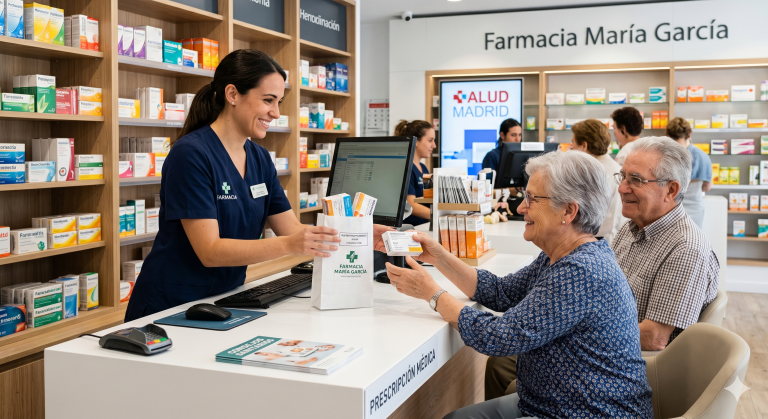
A major overhaul of Spain’s pharmaceutical co-payment system took effect on May 14, 2026. Pushed through by the Ministries of Health and Finance via royal decree, the reform completely replaces the outdated 2012 framework.
The primary objective of the new system is to make healthcare fairer. By expanding the previous three income tiers into six progressive income brackets, the government aims to ensure that no resident is forced to skip or cut back on essential medications due to financial constraints.
Crucially, for many lower and middle-income residents, the introduction of monthly spending caps means public healthcare prescriptions will become noticeably cheaper.
Here is everything you need to know about how the new system works, the exact amounts you will pay, and the specific rules affecting expatriates and elderly residents.
The New Contribution Brackets and Monthly Caps
Under the public health system (Sistema Nacional de Salud or SNS), the amount you pay at the pharmacy counter depends on whether you are actively working (or self-employed) or a pensioner.
- Working Residents and Autonomous Workers
For working adults, the new six-tier income bracket introduces monthly caps for lower earners for the first time—providing vital financial protection for those managing chronic conditions.
Annual Income Bracket | Co-payment % | Monthly Spending Cap |
Up to €9,000 | 40% | €8.23 |
€9,000 to €17,999 | 40% | €18.52 |
€18,000 to €34,999 | 45% | €61.75 |
€35,000 to €59,999 | 45% | No Cap |
€60,000 to €99,999 | 50% | No Cap |
Over €100,000 | 60% | No Cap |
- Pensioners and Retirees
The reform heavily protects older residents. Most retirees will find their contribution percentage locked at 10%, but the monthly spending caps vary according to total annual income.
Annual Pension Income | Co-payment % | Monthly Spending Cap |
Below €18,000 | 10% | €8.23 |
€18,000 to €59,999 | 10% | €13.37 |
€60,000 to €99,999 | 10% | €18.52 |
Over €100,000 | 60% | €61.75 |
Who Pays Zero?
Complete exemptions from prescription charges remain in place for the most vulnerable groups. You will pay nothing (€0) if you receive the Minimum Living Income (Ingreso Mínimo Vital), hold a non-contributory pension, are unemployed and have exhausted all benefits, or are a minor with a recognized disability.
Vital Considerations for Expats and Elderly Residents
Navigating foreign healthcare can be daunting. If you are an expat or an older international resident living in Spain, this reform affects you in very specific ways:
- The S1 Form Route (UK & EU Retirees)
If you are a retiree drawing a state pension from the UK or an EU country and you live in Spain full-time, you likely access the Spanish public healthcare system via the S1 Form.
- How your bracket is determined: Once your S1 is registered with the Spanish social security office (Instituto Nacional de la Seguridad Social – INSS), you are legally integrated into the system as a pensioner. Your prescription co-payment tier will be tied to your worldwide pension income.
- Action item: Ensure your income details are correctly linked to your regional health card (tarjeta sanitaria), as the pharmacy systems pull this data automatically.
- The Convenio Especial (Pay-in Public Health)
Many expats who do not work in Spain and are not yet of retirement age use the Convenio Especial—a monthly pay-in scheme to access state healthcare.
- While the Convenio grants full access to state doctors and hospitals, it traditionally does not subsidize prescriptions. If you are on this scheme, you generally pay 100% of your medication costs out-of-pocket unless a specific regional rule applies to you. Factor the new pharmacy caps into your budget when comparing the Convenio Especial against private health insurance.
- Private Health Insurance Prescriptions
If you use private healthcare or hold a private policy (common for Digital Nomad or Non-Lucrative Visa holders), private prescriptions do not qualify for these public subsidies. If a private specialist writes you a prescription, you must pay the full market price at the pharmacy. To benefit from the new subsidized rates and monthly caps, the medication must be transcribed onto the public system by a state GP (médico de cabecera).
Practical Checklist for Residents
- Check Your Health Card: When your local pharmacy scans your tarjeta sanitaria, the system automatically applies your correct co-payment percentage and tracks your monthly spending cap. If you believe you are being charged the wrong bracket, visit your local health center (centro de salud) or social security office to update your income status.
- Keep Track of the Monthly Cap: Once your spending hits your bracket’s monthly cap (e.g., €8.23 or €13.37), subsequent public prescriptions for the rest of that calendar month should automatically drop to €0 at checkout.
- A Note on Supply: Due to global supply chain pressures, pharmacies across Spain have reported occasional localized medicine shortages. If you are on long-term, critical medication, it is highly recommended to speak with your local pharmacist well in advance so they can ensure stock or source an approved bio-equivalent alternative.